Early Symptoms of Hernia You Should Never Ignore
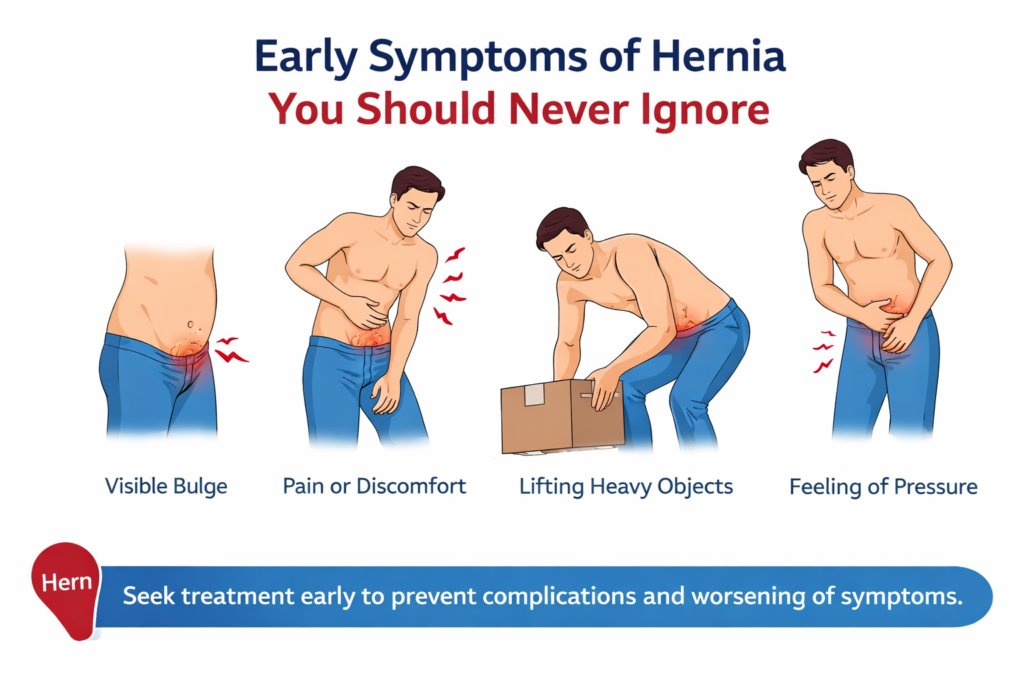
Hernia is a common medical condition that occurs when an internal organ pushes through a weak area in the surrounding muscle or connective tissue. Many people ignore the early symptoms of hernia, thinking it is a minor discomfort. However, delaying diagnosis and treatment can lead to serious complications. 1. Visible Bulge in the Abdomen or Groin One of the most noticeable symptoms of a hernia is a visible bulge or swelling in the abdomen or groin area. This bulge may become more noticeable when standing, coughing, or lifting heavy objects. In some cases, the bulge may disappear when lying down but reappear during physical activity. 2. Pain or Discomfort Many patients experience mild to moderate pain in the affected area. The discomfort may increase when: Pain is often the first indication that the abdominal muscles have weakened. 3. Feeling of Pressure or Heaviness People with hernia often feel pressure, heaviness, or a pulling sensation in the abdomen. This feeling can become worse during physical activities or long hours of standing. 4. Burning or Aching Sensation A burning or aching sensation around the bulge is another common symptom. The affected area may also feel tender or sensitive to touch. 5. Nausea or Digestive Discomfort In some cases, hernias can affect digestion and cause symptoms such as: These symptoms may indicate that the hernia is affecting the intestine. Causes and Risk Factors of Hernia Several factors can increase the risk of developing a hernia. Some of the most common causes include: Lifestyle factors and aging can also weaken the abdominal wall, making hernias more likely. When Should You See a Doctor? If you notice a persistent bulge, pain, or discomfort in the abdomen, it is important to consult a qualified surgeon as soon as possible. Immediate medical attention is required if you experience: These symptoms may indicate a strangulated hernia, which requires emergency treatment. Treatment Options for Hernia Treatment depends on the size and severity of the hernia. In many cases, surgery is recommended to repair the weakened muscle. Modern surgical options include: Laparoscopic Hernia Surgery A minimally invasive procedure performed through small incisions using specialized instruments. This technique allows faster healing and minimal scarring. Robotic Hernia Surgery Robotic-assisted surgery provides greater precision and control for complex hernia repairs. It helps reduce pain and recovery time compared to traditional surgery. Benefits of Minimally Invasive Hernia Surgery Advanced surgical techniques offer several advantages: These modern procedures allow patients to return to their normal activities sooner. Conclusion Hernia is a condition that should never be ignored. Recognizing the early symptoms of hernia and seeking medical advice can help prevent complications and ensure timely treatment. If you notice symptoms such as a visible bulge, pain, or pressure in the abdomen, consult an experienced surgeon for proper evaluation. Early diagnosis and modern surgical treatment can provide long-term relief and improve quality of life.