- Sohana Hospital , SAS Nagar , Sector 77 , Mohali, Punjab (160104), India.
Haemorrhoids & Perianal (Piles) Surgery
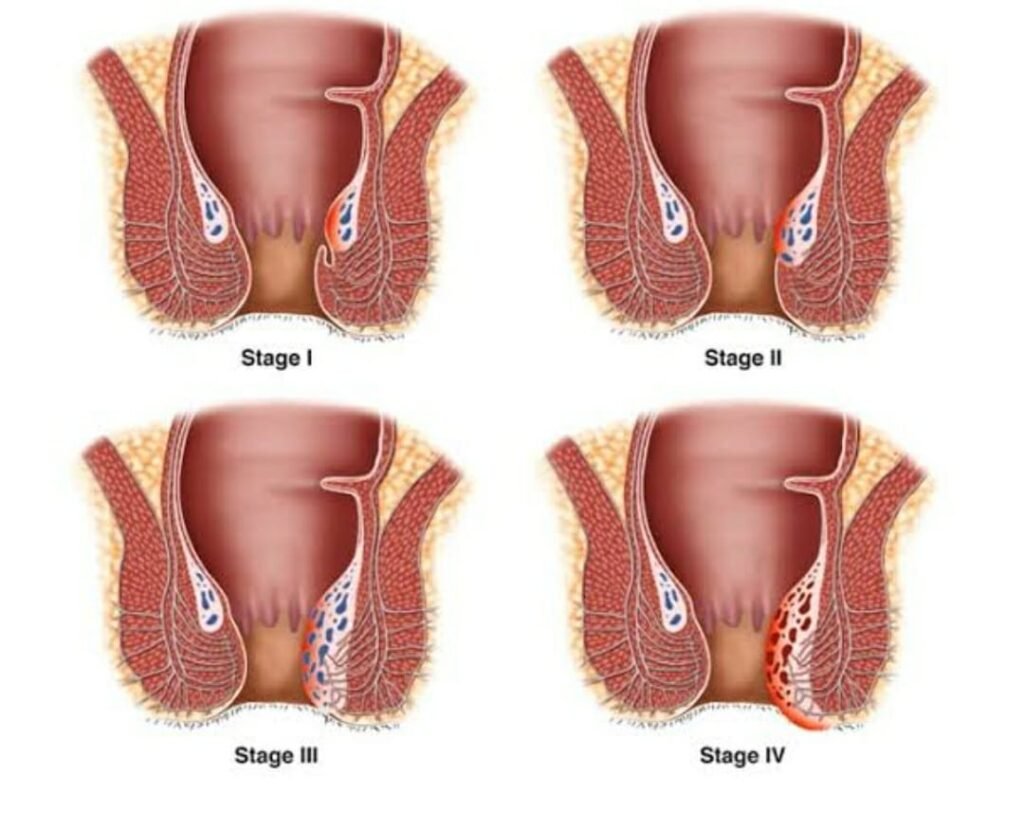
General Surgery – Haemorrhoids
Swollen & inflamed rectal veins that cause discomfort & bleeding
Symptoms of Haemorrhoids
- Bleeding while passing stools.
- Perianal discomfort and itching
- May become prolapsed and thrombosed in advanced stages causing acutely painful perianal masses
Comparison of Hemorrhoid
Treatment Techniques
|
Open
|
Laser
|
Stapler (PPH)
|
|---|---|---|
|
Involves complete surgical removal of hemorrhoidal tissue
|
Uses focused laser energy to shrink & seal hemorrhoidal tissue
|
Uses a circular stapling device to remove a ring of tissue with lifting of hemorrhoidal tissue
|
|
Longer recovery period
|
Shorter recovery period
|
Shorter recovery period
|
|
Increased risk of bleeding & infection and stenosis
|
Reduced risk of bleeding & infection
|
Less risk of pain & bleeding
|
|
Minimal chances of recurrence
|
May be inappropriate for very large hemorrhoids
|
Best for large hemorrhoids
|
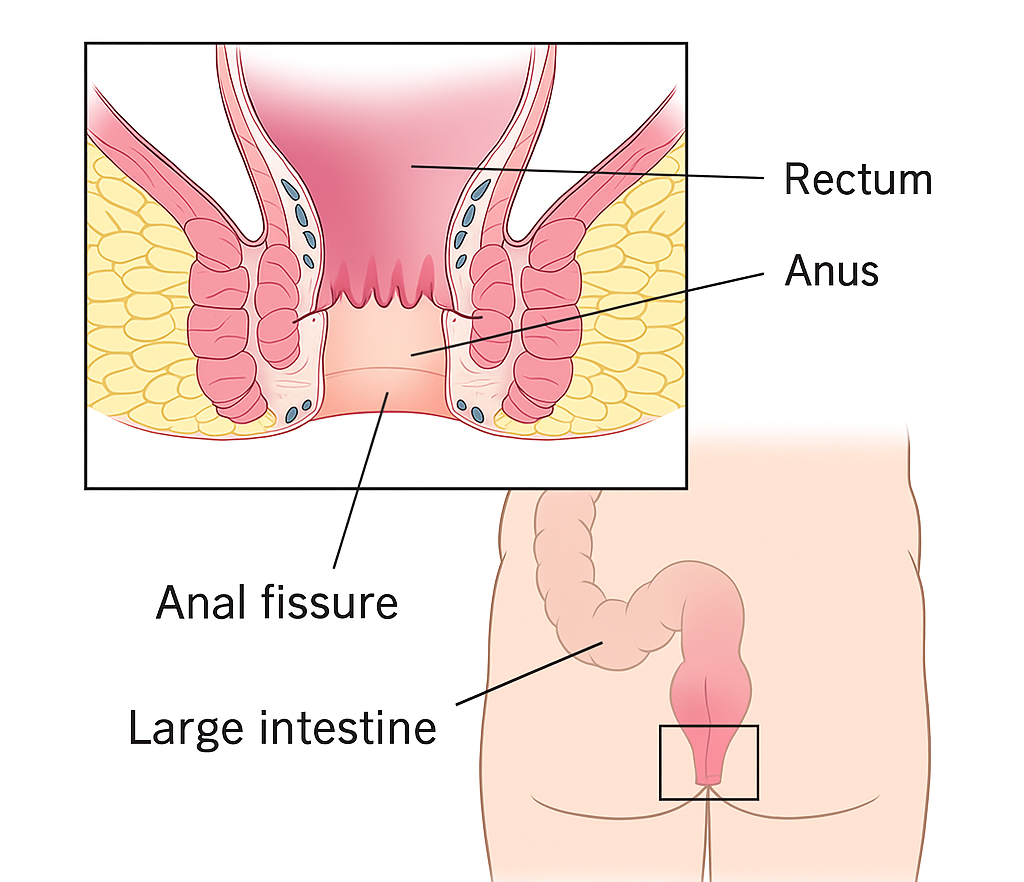
Anal Fissures
An anal fissure is a small tear or cut in the lining of the anal canal, usually caused by passing hard or strained stools. This common condition can cause sharp pain, bleeding, and discomfort during or after bowel movements. Although often mistaken for hemorrhoids, fissures are distinct and require specific treatment.
Symptoms of Anal Fissures
- Sharp, burning pain during or after passing stool
- Bright red blood on toilet paper or stool
- Visible tear or crack near the anal opening
- A small lump or skin tag near the fissure (chronic cases)
- Itching or irritation around the anus
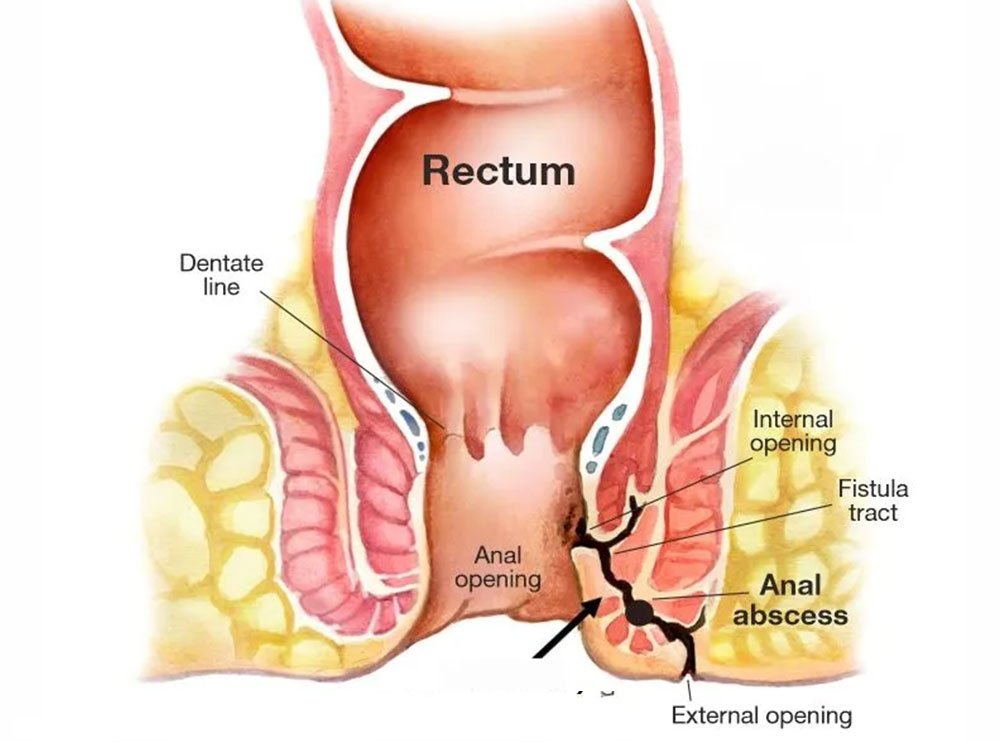
Fistula-in-Ano
Fistula-in-Ano is a chronic, abnormal tunnel that forms between the anal canal and the skin around the anus. It is usually the result of a previous anal abscess that did not heal completely. The condition causes persistent discharge, pain, and skin irritation, and does not heal on its own — requiring surgical intervention for permanent relief.
Symptoms of Fistula-in-Ano
- Constant or intermittent pus or fluid discharge from an opening near the anus
- Pain, swelling, or redness in the anal area
- Recurrent abscess formation
- Skin irritation and itching
- Fever (in case of active infection)
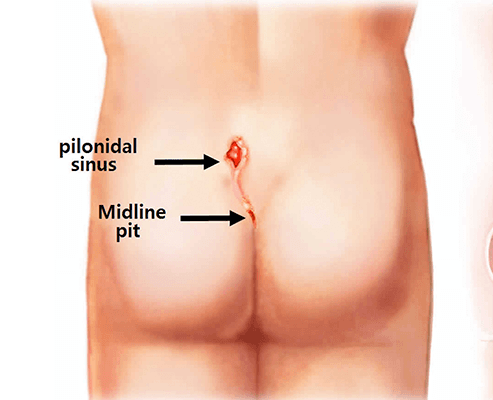
Pilonidal Sinus
Pilonidal Sinus (PNS) is a small tunnel or cyst that forms near the tailbone at the top of the buttocks crease. It often contains hair, dirt, and skin debris, and can become infected, causing pain, swelling, and pus discharge. This condition is most common in young adults, especially those who sit for long periods or have thick body hair.
Symptoms of Pilonidal Sinus
- Painful swelling or a lump near the tailbone
- Pus or blood discharge from a small opening in the skin
- Foul-smelling fluid
- Redness and tenderness in the area
- Fever (in case of severe infection)